
Cannon County Most Wanted Access
The Cannon County Sheriff's Office is the place to start with any most-wanted or warrant question. The county publishes no web list of wanted fugitives. There is no searchable warrant database. No live booking page exists either. So a Cannon source offers no current count, photos, or update schedule to check. Third-party sites and old social media posts cannot fill that hole. They may point to another agency, a different date, or the wrong person entirely.
Reach the sheriff at 110 Alexander Drive, Woodbury, TN 37190. The non-emergency line is (615) 563-1000. Call 911 for any immediate threat. A missing web list does not mean no warrants exist. It only means the county has not put its wanted records into a public online roster.
That gap trips up anyone who sees "Cannon County wanted" in a search result. An agency can hold records without posting them online. Ask the official office which record is public and how to check it. Trusting a page that names no agency, date, or update method is a mistake.
Safety note. Never approach, follow, publicly identify, or try to detain someone believed to be wanted. Report emergencies to 911 and pass other tips to the proper official channel.
Cannon Wanted Listings: Statewide Limits
Tennessee does run an official wanted program with photos. It belongs to the state, though, not to Cannon County. TBI's Top 10 Most Wanted features fugitives from across Tennessee who meet the program's criteria. It helps when TBI actually names the person you're checking. An empty or positive result says nothing about a Cannon County warrant, local custody, or any county connection at all.
The TBI page publishes only what its program chooses to publish. It cannot stand in for a missing Cannon list. Read any reward amount or date straight from the official TBI entry rather than copying it into a local record.
TBI says its program covers people sought in qualifying serious matters: violent felonies, major drug-trafficking crimes, and qualifying escapes, each backed by an agency warrant. That screen makes the Top 10 highly selective. It also means the list's absence cannot answer every county warrant question. For Cannon-specific matters, the sheriff and the clerk remain the contacts.
| State program field | What TBI presents |
|---|---|
| Photograph | An official TBI program image for the statewide listing. |
| Name | The identity named in that specific Top 10 entry. |
| Alleged offense | The charge identified by TBI, not a court finding of guilt. |
| Reward | The reward information shown by TBI for the state program entry. |
| Adding date | The date TBI added the person to its Top 10 program. |
The official TBI Top 10 page appears below as a statewide reference, not a Cannon County wanted roster.
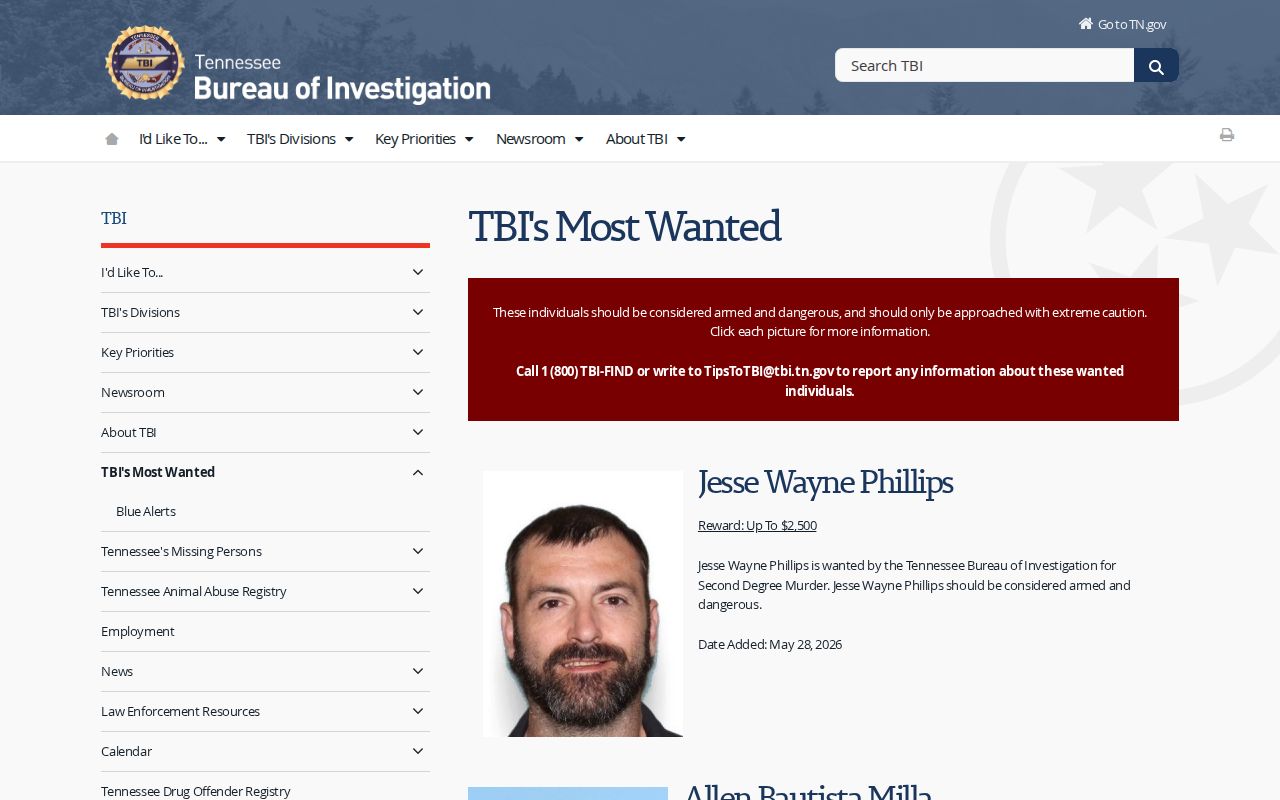
Use the state program only for the people and details it actually names. For a Cannon court record or a local warrant, the county contacts below are the better starting point.
Cannon Warrant Records: Court Route
For a public record question about a possible warrant, Tennessee courts self-help points to the county court clerk. The Cannon County Circuit Court Clerk, Katina George, handles records for General Sessions and Circuit criminal matters. Visit at 200 West Main Street, Woodbury, TN 37190, or call (615) 563-4461. The clerk explains docket and record-access procedures. The sheriff handles custody questions and law-enforcement confirmation.
A good inquiry names the person, adds a date or case detail when possible, and asks which office holds the record and what steps apply. Don't expect the clerk to function as an online warrant service, since no unified public case search covers all Cannon criminal matters. Docket PDFs can be date-specific. A name match alone proves neither identity nor current status.
The clerk's role continues after an arrest or a summons. General Sessions and Circuit cases can move through hearings, bond rulings, arraignment, dismissal, diversion, plea, trial, sentence, or appeal. Ask for the current court record, and for the final outcome when one exists.
- Use the court clerk for the docket, case, or warrant-record question and ask what public access method applies.
- Use the sheriff’s non-emergency line to ask for the proper local custody or law-enforcement confirmation route.
- If the concern is about a person’s own legal situation, seek counsel and address the matter through lawful court and law-enforcement channels.
The county-wide Cannon County booking and court records hub sorts booking records, custody checks, and later court outcomes into separate paths. They are related events, but not interchangeable.
Cannon Warrant, Summons, and Booking
Warrants, wanted notices, bookings, and dockets each mean something different. A warrant gives officers authority to make an arrest. A wanted listing is a public-safety notice chosen for publication. Booking happens once a person is actually in custody, and the docket picks up after a case reaches the court. Blurring those labels is a common mistake. People sometimes treat a booking photo, a news report, or a docket date as proof that a live warrant exists.
Tennessee Rule 4 lays out how probable cause supports an arrest warrant, and it covers when a criminal summons can be used instead. That distinction explains why a court record and a law-enforcement record can play separate roles in the same matter. The rule offers no Cannon County online search. It also gives no basis for inventing local warrant categories the county has not published.
| Record or process | Meaning in the Rule 4 context | What it does not prove |
|---|---|---|
| Arrest warrant | A court process that may issue on probable cause. | A final outcome in the criminal case. |
| Criminal summons | An alternative process that Rule 4 permits in appropriate circumstances. | That the person was booked into the Cannon County Jail. |
| Wanted listing | A separate public notice, where an agency chooses to publish one. | That every active warrant appears in a public list. |
The Rule 4 source appears here for one reason: it defines the statewide process, not a local collection of wanted photos.
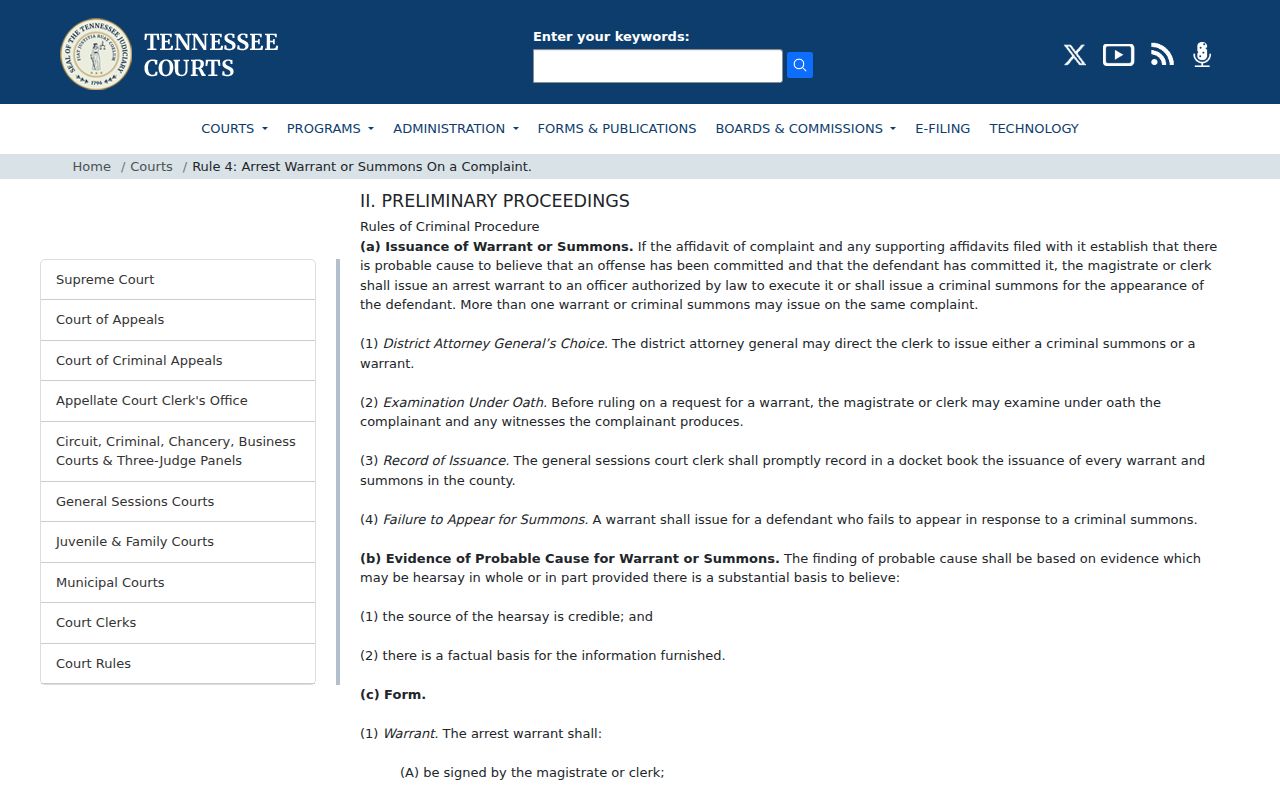
A booking typically lists an initial charge along with custody details. From there, the court docket takes over, recording hearings and other case events. Charges can shift or vanish as a case moves, so the final disposition is where the story truly ends.
Match your question to the right record. Booking and custody questions go to the sheriff. Court files and outcomes belong with the clerk. TBI's Top 10 sits apart as a state public-safety program. That ordering keeps a booking image from standing in as a warrant document, and a wanted notice from being read like a court judgment.
Cannon Wanted Tips: Call Safely
1-800-TBI-FIND is the Tennessee Bureau of Investigation's statewide tip line, and the agency also accepts reports through its official online tips form. Either route puts information about a Cannon County fugitive straight into TBI's hands. Callers can reach the TBI tips page any hour of the day and submit what they know without picking up a phone.
Keep the tip useful and brief. A current address, a vehicle, or a place the person was last seen helps far more than a hunch. Never confront anyone or try to confirm an identity on your own. If someone is in immediate danger, dial 911 first and let responders handle it.
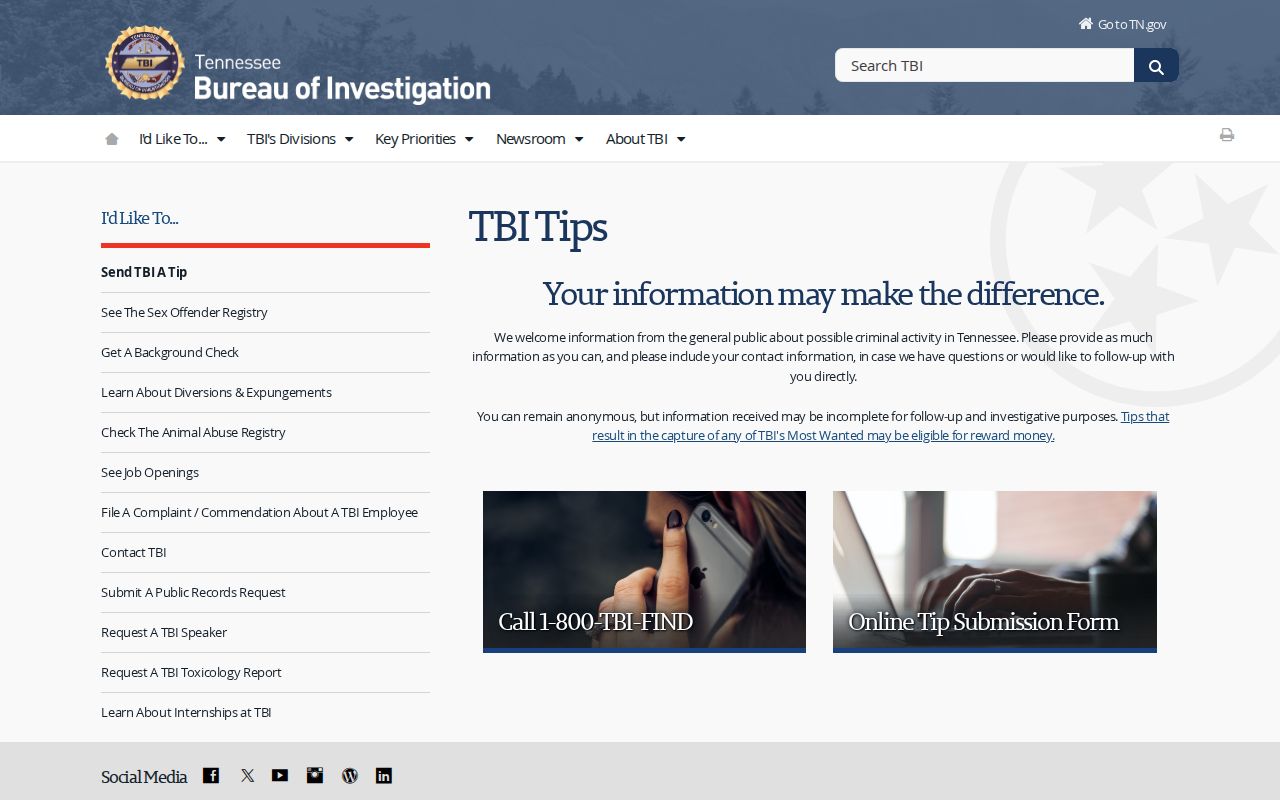
A tip from the public never makes the caller a detective. Your job ends at the phone call. The agency that receives the information decides what it means, whether it matches a wanted notice, ties to an open case, or belongs to a different record entirely.
Cannon Records: Federal Boundary
A search hit does not always mean Cannon County custody. The Bureau of Prisons inmate locator covers federal inmates only. Tennessee's FOIL system, run by the Department of Correction, tracks state felony custody and supervision. Neither tool works as a Cannon County warrant lookup, and neither will show a local booking photo or jail roster. People do move between systems, though. When that happens, confirm the transfer with the agency that started the case rather than guessing from another locator.
FOIL has its own limits. It can show a state-held photo, location, offense, sentence, parole hearing, or release details, but only for people inside its state system, which may reflect a later sentence rather than the Cannon event that sparked your search. A blank FOIL result does not rule out a county booking, a local release, a misdemeanor, or a pending court date. The same logic applies in reverse: a federal hit tells you nothing about whether a Cannon warrant is still active. Every locator answers only the custody question its own jurisdiction allows.
The BOP locator below shows that federal boundary in practice. It cannot produce a local booking image, and it cannot tell you whether a Cannon court process is live.
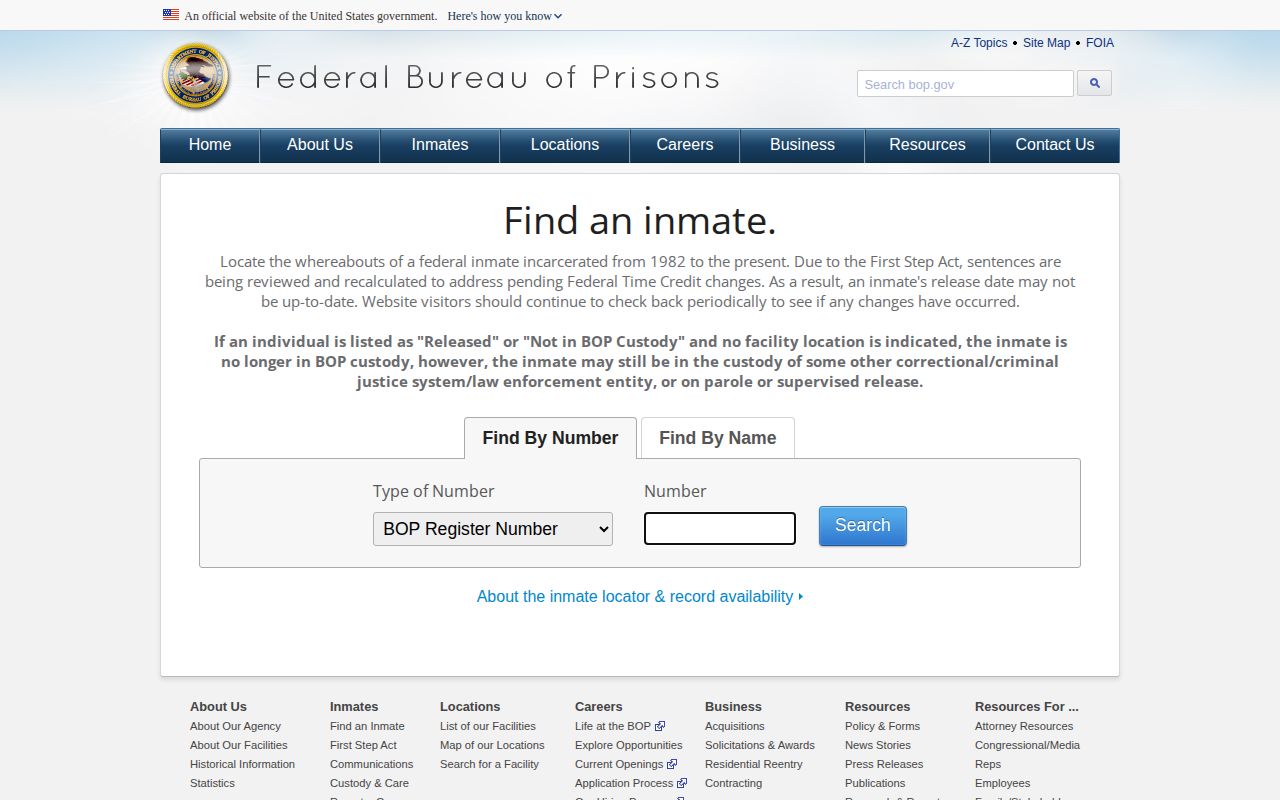
A Cannon County matter splits into two doors. Custody questions, like where someone is being held after an arrest, belong with the sheriff's office. The case file itself, along with its later outcome, sits with the court clerk. Keeping those separate prevents mix-ups between a statewide notice, a federal locator, and a county's own warrant paperwork.